Wind energy is one of the fastest-growing sectors in the region, and with that growth comes a workforce that is regularly asked to climb 80–120 metre towers, work in confined nacelles, operate in extreme heat or cold, and respond to emergencies at height or offshore. Unlike a typical office role, the physical and psychological demands of wind turbine work mean that “fitness for work” is not a soft HR formality — it is a core safety control.
For HR and HSE professionals building or reviewing a medical fitness programme, the question isn’t just “does this worker have a pulse and a clean bill of health?” It’s “can this specific person safely perform the specific physical and cognitive demands of this specific role, in this specific environment?” That distinction matters, and it’s where a structured, industry-recognised assessment framework becomes essential.
Why Fitness for Work Is a Joint HR and HSE Issue
It’s tempting to file medical assessments under “HR paperwork” or “HSE compliance” alone, but the reality is both functions own real risk here.
From an HSE perspective, wind turbine work involves:
- Climbing internal ladders or using climb-assist systems to reach the nacelle
- Working in confined spaces with restricted rescue access
- Exposure to heat stress inside the nacelle, cold stress at height, noise, and vibration
- The physical demand of self-rescue in an emergency — a worker who cannot descend unaided under duress is a hazard to themselves and the rescue team
- Offshore-specific risks: transfer by vessel or helicopter, working over water, and extended time away from immediate medical care
From an HR perspective, the concerns are just as significant:
- Duty of care and fair treatment — fitness assessments must be non-discriminatory, consistent, and defensible
- Managing return-to-work after injury or illness without unlawful exclusion
- Data privacy around sensitive medical information
- Workforce planning — a worker deemed “unfit” needs a clear pathway (redeployment, reassessment, or exit) rather than ambiguity that damages trust
- Insurance, liability, and contractual compliance, since many principal contractors and turbine OEMs will not allow site access without a valid medical certificate
When HR and HSE work from the same playbook, both the worker and the organisation are better protected.
The Role of the Energy Institute’s Assessment Guidance
Historically, wind turbine medical fitness was assessed using a patchwork of borrowed standards — offshore oil and gas medicals, seafarer certification, or generic occupational health checks — none designed for the specific demands of turbine climbing and confined-space rescue. The Energy Institute (EI), working with the G+ Global Offshore Wind Health and Safety Organisation, closed this gap with EI 3583: Medical Fitness Assessment for Wind Turbine Workers, giving the industry a consistent, standardised approach to assessment content, clinical criteria for climbing- and rescue-relevant conditions, validity periods, and conditional fitness or restrictions rather than a blunt fit/unfit outcome. It’s worth noting this guidance covers medical fitness assessment specifically, not statutory health surveillance, so organisations still need to run both in parallel where regulations require it. For HR and HSE teams, adopting a framework aligned to EI guidance standardises decision-making, gives a defensible basis for fitness decisions, and makes cross-contractor workforce mobility far more practical.
Building It Into Your HR and HSE Programme
A few practical principles worth embedding:
- Assess against the job, not just general health. A worker should be assessed against the actual physical and environmental demands of turbine access, confined space work, and emergency self-rescue — not a generic office-based medical.
- Make outcomes proportionate. Conditional fitness, restrictions, and reassessment pathways should be the default wherever possible, with outright exclusion reserved for genuine safety-critical risk.
- Protect medical confidentiality. HR should receive a fitness outcome (fit / fit with restrictions / unfit), not raw clinical detail, unless the worker consents otherwise.
- Keep certification current and portable. Track validity periods and build reassessment reminders into your HR system so lapses don’t become a site-access surprise.
- Use a provider who understands the standard. This is where the choice of medical partner matters more than most organisations initially realise.
Choosing the Right Medical Partner
Getting the framework right on paper only matters if the assessments themselves are conducted competently and consistently. This makes the choice of medical provider a genuine risk decision, not just an administrative one.
When evaluating a provider for wind turbine fitness for work assessments, look for:
- Sector-specific experience, ideally with a track record in offshore, maritime, or energy-sector medicals (OGUK-equivalent assessments, BOSIET medicals, seafarer certification). An assessor who already understands confined-space work, offshore transfer, and self-rescue demands is far better placed to apply wind-turbine-specific criteria correctly than a generalist clinic encountering them for the first time.
- Alignment with EI 3583, so certificates are consistent, portable across contractors, and defensible if a fitness decision is ever challenged.
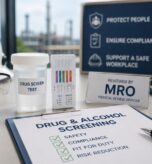
- Comprehensive on-site testing — X-ray, spirometry, audiometry, ECG and ECG treadmill testing, and drug and alcohol screening under one roof — which reduces the number of appointments and turnaround time for your workforce.
- Accessibility across your project locations, which matters for HR teams managing multi-site or multi-contractor workforces and needing consistent scheduling and record-keeping.
Choosing an established, appropriately experienced provider gives HSE confidence that assessments are genuinely fit for purpose, and gives HR a consistent, well-documented process to stand behind.