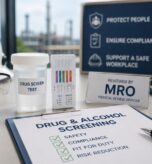
HR and HSE tend to worry about fitness for work from different angles — HR thinks about liability, fairness, and attendance; HSE thinks about hazards, incidents, and audits. Both sets of concerns converge on the same answer: a proper fitness for work assessment, grounded in occupational medicine rather than a generic MC — typically carried out by a Designated Workplace Doctor (DWD), a physician formally registered with MOM for this purpose. Here’s how it resolves what each team is actually worried about.
HR’s concerns — and how fitness for work assessment addresses them
- “Are we personally exposed if something goes wrong?” Under the Workplace Safety and Health Act, managers and directors carry personal liability for failing to exercise due diligence — a manager who knowingly ignores a known hazard can be personally fined up to S$200,000 or imprisoned. A properly conducted fitness for work assessment is exactly the kind of due diligence MOM inspectors and courts look for — a documented, job-specific judgment on risk, not just HR’s opinion or a generic MC on file.
- “Are we discriminating, or are we managing risk?” This is the one that worries HR most. With mental health now an explicitly protected characteristic under the Workplace Fairness Act, alongside age and disability, a fitness decision made informally can shade into discrimination — denying an opportunity because of a disclosed condition is discrimination, not a judgment call, and sharing a diagnosis without consent is a violation even internally. A structured assessment, run by a DWD, takes that judgment out of HR’s hands and grounds it in job-task compatibility rather than the person’s diagnosis in the abstract — giving HR a defensible, criteria-based basis for the decision.
- “Why do return-to-work cases keep dragging, or go wrong?” Aligned with MOM’s Return to Work (RTW) Programme, a fitness for work assessment determines whether and how an employee can resume duties after leave for illness or injury — including, for hazardous roles, the certificate of fitness that a DWD is authorised to issue before work can resume. Without that step, employees either get rushed back too soon or left in limbo longer than necessary. A proper assessment gives HR a clear, medically grounded basis to act either way.
- “Are we missing a hidden productivity problem?” Presenteeism — employees physically at work but operating well below capacity due to unmanaged health issues — is consistently shown to be more costly than absenteeism. Regular, targeted fitness assessments, rather than one-off checks, surface these issues before they quietly erode output.
HSE’s concerns — and how fitness for work assessment addresses them
- “Is our risk assessment actually connected to the people doing the work?” Under the WSH (Risk Management) Regulations, employers must assess health risks — ergonomic strain, noise, chemical exposure — and implement real controls, not just paperwork. Fitness for work assessment is the link between a task-based risk assessment and the actual physical and medical capacity of the person performing the task.
- “Will we catch a problem before it becomes an incident?” Musculoskeletal disorders, noise-induced hearing loss, and chemical exposure effects often develop with no early symptoms. Regular, targeted medical surveillance — conducted by a DWD trained in occupational medicine — is built specifically to detect these subtle signs before they escalate into disability or a reportable incident.
- “Can we prove due diligence when MOM comes knocking?” MOM inspectors can request risk assessments, training records, and medical surveillance documentation at any time. Under the Workplace Safety and Health (Medical Examinations) Regulations, results must be properly reported and recorded, creating a clean, auditable trail HSE can produce on demand.
- “Do we understand the actual environment, not just a description of it?” Statutory medical examinations under Singapore’s regulations give the DWD authority to inspect the actual place of work — meaning fitness recommendations can be grounded in real conditions like noise levels, ventilation, and physical layout, rather than a secondhand account of them.
- “Are we keeping pace with where regulation is heading?” MOM’s WSH 2028 framework sets national targets for reducing workplace injuries and ill health, with an explicit shift toward prevention through proactive health management rather than reactive incident response. Building fitness for work assessment into a standing programme — not a one-off medical check — is what that shift looks like in practice.
The bottom line
HR and HSE are ultimately worried about the same failure mode: a decision made without enough information that later turns into a claim, an incident, or a compliance finding. A properly run fitness for work assessment closes that gap for both teams at once — giving HR a lawful, defensible basis for employment decisions, and giving HSE a real link between risk assessments and the people doing the work. Treated as a joint HR–HSE process, rather than a one-off formality, it’s what turns fitness for work from paperwork into genuine risk management.
References: Workplace Safety and Health Act, Singapore; Workplace Safety and Health (Risk Management) Regulations; Workplace Safety and Health (Medical Examinations) Regulations 2011; MOM WSH 2028 framework; Workplace Fairness Act, Singapore; Ministry of Manpower — Designated Workplace Doctor (registration and responsibilities); Ministry of Manpower — Certificate of Fitness for Hazardous Work; Ministry of Manpower — Return to Work (RTW) Programme; Workplace Safety and Health Council — Statutory Medical Examinations Guidelines.